- Sectors
- Aerospace & Defense
- Big science
- Fintech
- Insights
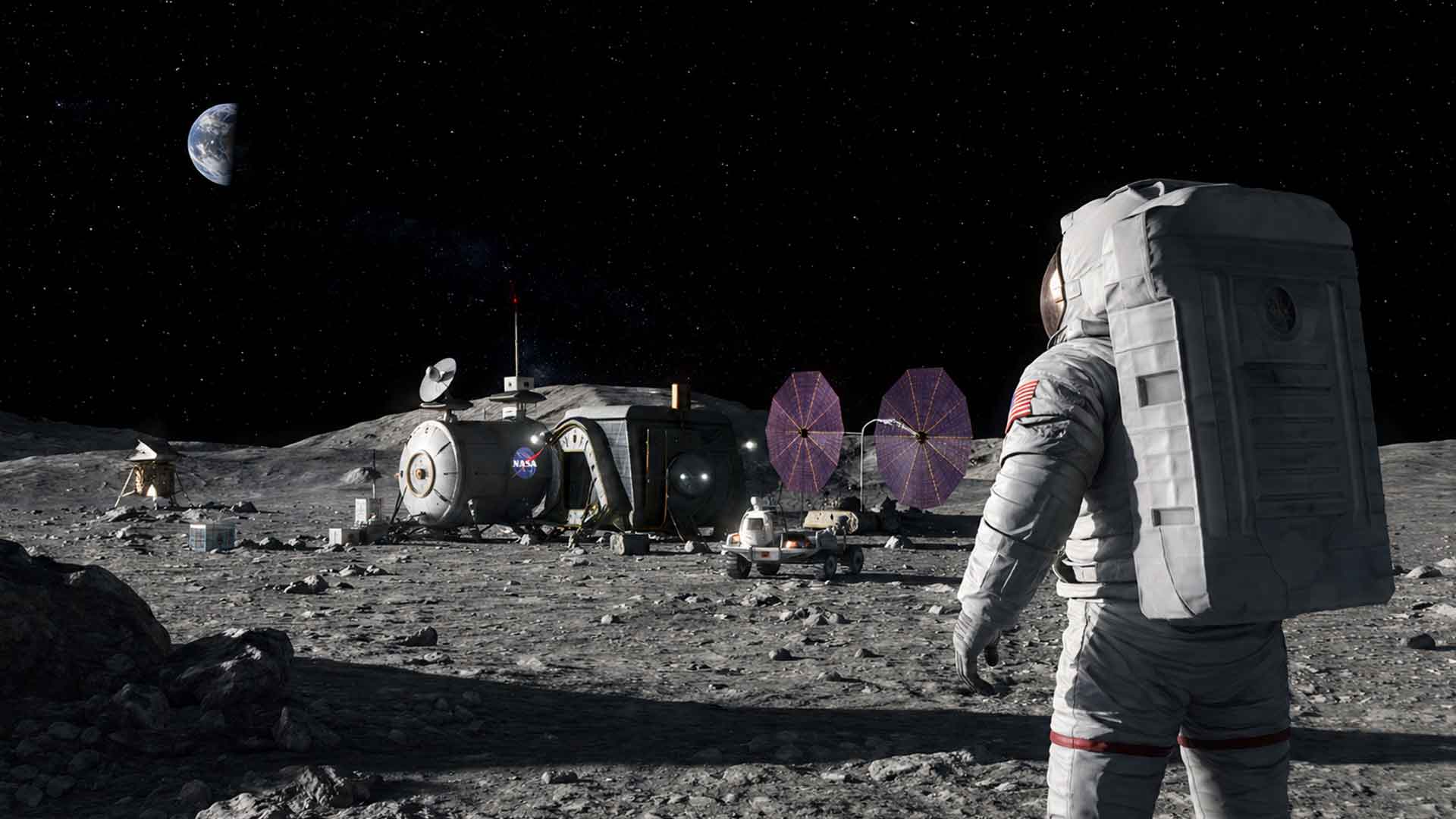
Humanity’s arrival on the Moon through the Apollo missions between 1969 and 1972 marked one of the greatest milestones in history, in a geopolitical context defined by technological competition between global powers.
Decades later, the Moon has once again become a central focus with programs such as Artemis, led by NASA, China’s lunar initiatives, and missions driven by agencies including ESA, JAXA, and ISRO. This time, the objective is not only to reach the Moon, but to establish a sustained presence and turn it into a key platform for the future of space exploration.
Interest in the Moon has evolved significantly over recent decades: we are moving from short-term exploration to sustained presence.
On one hand, the Moon offers enormous scientific and resource value. Its surface allows researchers to study the history of the solar system and test technologies in a real environment before undertaking more distant missions. In addition, regions such as the lunar south pole are attracting major interest due to the possible presence of water ice.
From a strategic perspective, the Moon is becoming a platform for deep-space exploration. It could serve as a base for long-duration missions and as an intermediate step toward Mars.
The Moon is expected to play a central role as a logistical, technological, and scientific hub.
Operating on the lunar surface means facing a highly hostile environment, where extreme conditions shape the design of every system.
Thermal control is an essential element of any lunar mission. Extreme conditions require efficient management of the heat generated by onboard equipment while protecting systems from temperatures outside operational limits. To address these challenges, a range of thermal control technologies adapted to the space environment are used.
All of these technologies are essential because they ensure the correct operation of systems in an environment where no natural thermal regulation mechanisms exist. Without proper heat management, missions can be compromised. In addition, because many of these systems operate passively, they provide high reliability while reducing energy consumption, a critical factor in lunar operations.
In this context of growing lunar activity, ARQUIMEA is involved in several major international missions, providing key technologies for thermal control and thermo-structural systems and helping ensure system reliability and performance in such a demanding environment.
LUPEX is an international mission focused on exploring the lunar south pole, a region of particular interest due to the possible presence of water ice and other strategic resources for future missions. Led by JAXA, with participation from ISRO and international collaborators, the mission aims to advance knowledge of the lunar surface and validate technologies required for sustained presence.
Within this mission, ARQUIMEA contributes to the thermal control system of the lander through the development of Loop Heat Pipes (LHPs), which passively transport heat and keep equipment within operational temperature ranges.
As part of the Artemis program, the Multi-purpose Habitat (MPH) is a pressurized habitat designed to support long-duration stays on the lunar surface, representing a key step toward sustained lunar operations.
ARQUIMEA participates in the development of this system through the design and manufacturing of a deployable radiator responsible for dissipating heat from the thermal fluid before it is recirculated inside the module. This type of solution is essential for maintaining stable thermal conditions in environments where heat management is especially critical. The project is currently in the early stages of development and is linked to phases following Artemis III.
Within the Artemis orbital infrastructure, the PPE module is the power and propulsion element of the Lunar Gateway, responsible for providing power, maneuvering capability, and orbital control for the station.
In this context, ARQUIMEA contributes as a supplier of thermo-structural panels, integrating solutions that combine structural and thermal control functions. These components incorporate technologies such as heat pipes and optical surfaces, helping manage heat and ensure system stability.
Recently, NASA announced changes to its lunar strategy. The Lunar Gateway program will no longer move forward as originally planned, and the agency has decided to focus directly on establishing a lunar base. In this new context, the possibility of using the PPE as part of a Mars-bound transport prototype powered by a nuclear reactor is currently being studied.
Lunar exploration is turning the Moon into a key infrastructure element within the space ecosystem. It is no longer just a destination, but a strategic hub.
Its value goes beyond science, encompassing technological development, the validation of systems under real operating conditions, and its role as a logistical node both in orbit and on the lunar surface. Initiatives such as Artemis and the evolving Lunar Gateway concept reflect this shift toward establishing permanent capabilities that enable continuous operations.
In this context, the Moon is positioning itself as an essential intermediate step toward more ambitious missions, including the exploration of Mars and other planets, while also becoming a central component of the future space economy.
In such a demanding environment, thermal systems are becoming mission-critical technologies, essential to ensuring system operation and reliability. Within this landscape, participation in international programs reinforces ARQUIMEA’s role as a provider of key technologies for multiple lunar missions.
You can contact us through the following form.
If you would like to be part of our team, please visit our careers portal:
careers.arquimea.com
Thank you for contacting us, we will respond as soon as possible.
There was an error trying to send your message. Please try again later.