- Sectors
- Aerospace & Defense
- Big science
- Fintech
- Insights
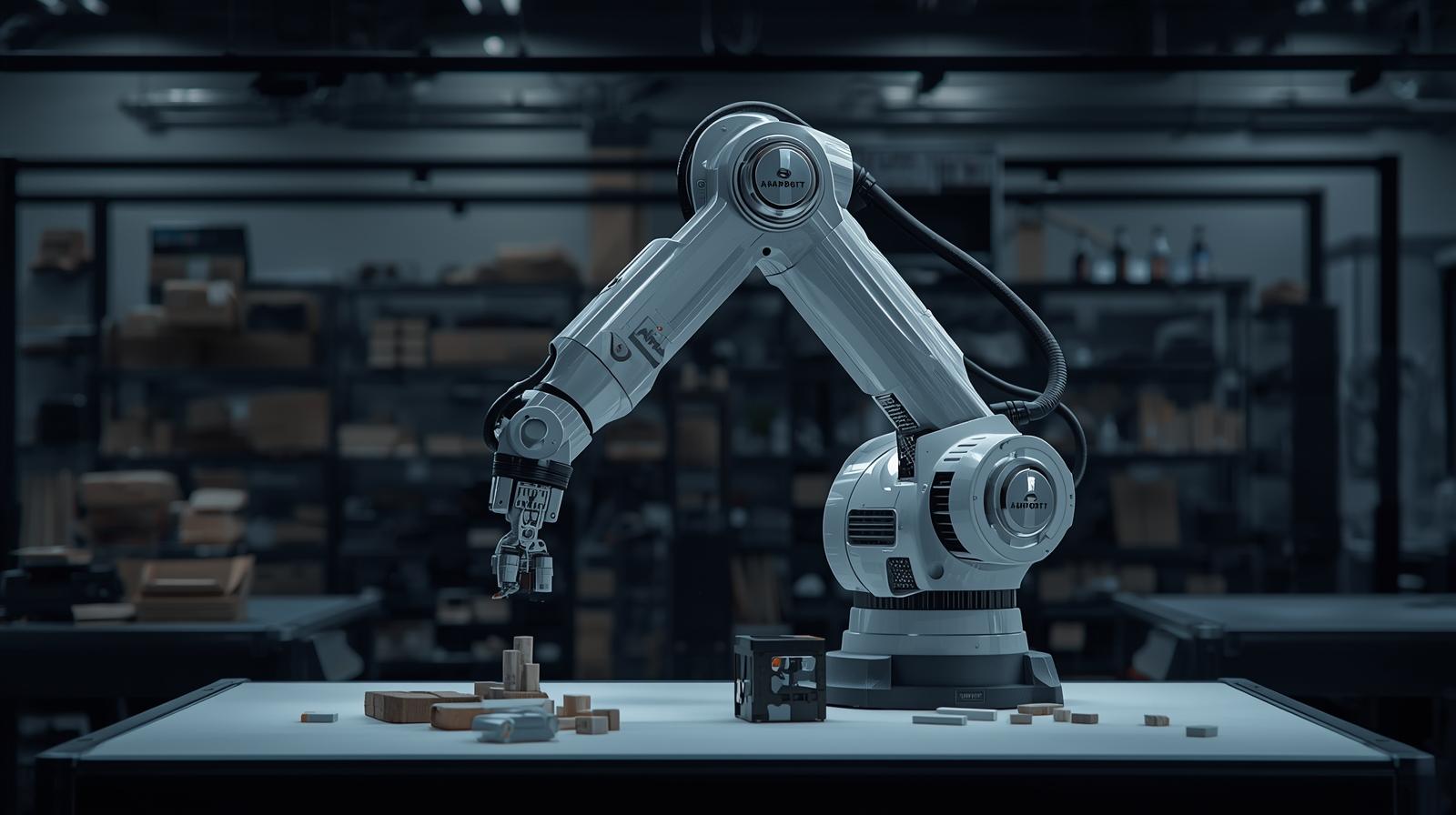
A few months ago, a video went viral showing a humanoid robot loading a dishwasher with apparent ease. Beyond the media buzz, the scene encapsulated one of the major challenges in contemporary robotics: manipulating everyday objects in cluttered environments shared with people. Placing a plate requires recognizing its geometry, estimating its weight, modulating grip force, and planning safe trajectories in real time. What appears trivial to a human involves integrating computer vision, motion control, and safe interaction within a single system.
Even so, collaborative robotics already has a discreet but tangible presence in real-world environments. According to the International Federation of Robotics, more than 55,000 collaborative robots were installed worldwide in 2023, mainly for assembly, logistics, and handling tasks. In practical applications, these systems can reduce repetitive physical strain in certain jobs by around 30%, according to industrial ergonomics studies, without replacing human supervision or decision-making.
This everyday use, although often invisible to the general public, marks a key difference from traditional automation. In certain scenarios, robots may share workspace with people without the conventional safety cages, provided that a proper risk assessment has been carried out and the corresponding safety functions are implemented. Collaboration does not imply the absence of protection, but rather a different approach based on force control, speed limitation, and environmental monitoring. Before asking how far this coexistence may go, it is worth pausing on a fundamental question: what truly defines a collaborative robot and what distinguishes it from other robotic systems.
A collaborative robot is defined less by the task it performs than by how it is configured to interact with people in a specific application. The term “cobot” is widely used, but collaboration is not an intrinsic property of the robot itself; rather, it results from a validated safety concept that enables human–robot interaction under defined conditions.
Unlike traditional industrial systems designed to operate physically separated from workers, collaborative applications may allow shared workspaces when a proper risk assessment has been conducted and appropriate safety functions are implemented, whether internal or external to the system. These include force and torque monitoring, speed limitation, environmental monitoring, and contact detection. Standards (such as ISO 10218 and ISO/TS 15066) provide the framework for these collaborative applications, offering context-dependent guidance rather than fixed universal limits.
It is also important to clarify that a cobot is not “intelligent” in a human sense, nor an autonomous system that improvises tasks. Its value lies in performing repetitive, precise, or physically demanding actions while the human operator retains control of the process, makes decisions, and resolves unforeseen situations.
Industry remains the main field for cobot deployment, but their use has changed in scale and context. It is no longer limited to large automotive plants, but extends to industrial SMEs, specialized workshops, and flexible production lines where volumes do not justify heavy automation.
In these environments, cobots typically handle tasks such as:
The reason for their adoption is not solely productivity. In many cases, it responds to ergonomic challenges, shortages of skilled labor, or the need to adapt quickly to product changes. A cobot can be reprogrammed in hours or days, compared to weeks for traditional industrial systems.
Some manufacturers have documented cases where the robot does not replace the operator, but instead reduces physical fatigue and errors, allowing the person to focus on higher value-added tasks.
Outside industry, one area where collaborative robots have progressively found their place is the healthcare and biomedical sector, though far from fully automated, futuristic operating rooms.
In hospitals and laboratories, cobots are mainly used for:
A clear example can be found in clinical analysis laboratories, where robotic automation is used for tasks such as sample pipetting, tube sorting, or internal transport between workstations. In these environments, repeatability is critical: small errors in volume or handling can alter diagnostic results. The introduction of robotic systems has been shown to improve consistency and reduce operational variability, while also limiting staff exposure to biological agents.
In rehabilitation, some cobots function as controlled assistance devices, guiding repetitive movements in patients with neurological damage. Here, the key is not autonomy, but the ability to adapt to the patient’s strength and pace, something impossible with rigid systems.
Logistics is another area where human–robot collaboration is becoming commonplace, even if it often goes unnoticed. In warehouses and distribution centers, cobots handle:
Unlike autonomous mobile robots (AMRs), cobots typically operate at the same workstation as the human, sharing a table, shelf, or conveyor belt.
In services, their presence is more limited but growing. Some airports, libraries, and research centers use collaborative robotic arms for basic assistance tasks, educational demonstrations, or light maintenance. They do not replace human interaction, but expand the operational capacity of existing teams.
Despite their expansion, collaborative robots are far from a universal solution. Their limitations are clear:
These are compounded by less technical but equally important challenges: social acceptance, workforce training, and the design of truly collaborative processes. Numerous studies in ergonomics and sociotechnical systems, published in journals such as Robotics and Computer-Integrated Manufacturing and IEEE Robotics & Automation Magazine, show that collaboration only works when the system adapts to the worker, not the other way around.
Collaborative robots have not entered daily life in a spectacular way, and that may be a good sign. Their integration has been gradual, pragmatic, and quiet, focused on solving specific problems rather than radically transforming environments.
They are not yet widely present in our homes, nor do they make decisions for us. But they are present in the products we consume, the healthcare processes that serve us, and the services we use, even if we do not always see them.
The underlying question is not whether we will coexist with cobots, but under what conditions: with which standards, what levels of transparency, what training, and what social objectives. Collaborative robotics presents an interesting opportunity precisely because it does not seek to replace people, but to redefine how we share work with machines.
Whether that collaboration will be truly useful, safe, and accepted will depend less on the technology itself than on the human decisions guiding its design and deployment. Ultimately, the critical factor is not the robot, but us.
At ARQUIMEA Research Center, we approach robotics with a clear premise: collaboration between humans and machines is not only a matter of physical safety, but of genuine understanding and integration in shared environments. Our research focuses on advanced perception, human–robot interaction, and the development of autonomous systems capable of operating in complex and dynamic contexts.
One example of this commitment is PULSAR HRI, an ARQUIMEA spin-off specialized in enabling safe and dynamic physical interaction between humans, robots, and environments. At PULSAR HRI, technologies are developed that allow robots to interpret their surroundings at high speed and move with human-like agility, dynamically responding to environmental changes and human interactions. The goal is not merely to automate tasks, but to enhance the quality of interaction and make collaboration more natural, efficient, and safe.
We believe that the future of collaborative robotics depends not only on faster sensors or algorithms, but on systems capable of integrating seamlessly into everyday life. That is the guiding principle behind our work: advancing toward robotics that does not replace, but complements and amplifies human capabilities.