- Sectors
- Aerospace & Defense
- Big science
- Fintech
- Insights
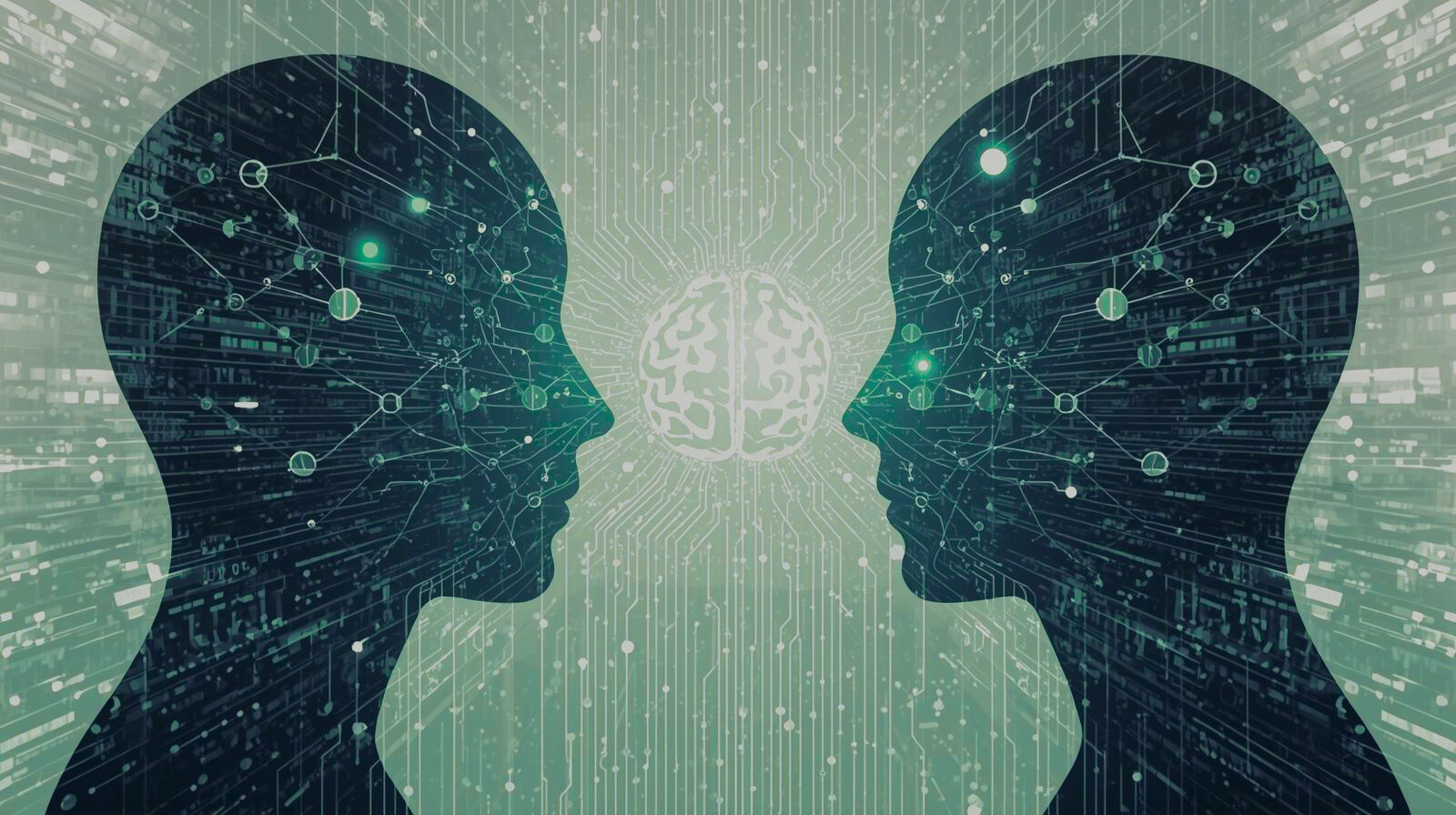
Artificial intelligence is no longer a technological promise, but an expanding infrastructure that is quietly reshaping how we conduct research, produce knowledge, and make decisions. In 2024, more than 55% of organizations worldwide reported using AI in at least one critical business function, compared to just 20% five years earlier. This growth is not only quantitative; it also reflects an increasingly deep integration of intelligent systems into scientific, industrial, and social processes.
The acceleration is particularly visible in areas such as data analysis, knowledge automation, and generative systems. The use of generative AI doubled in less than a year, and one in three companies now reports obtaining tangible value from these models in real-world operations. This pace of adoption is unprecedented in recent technological history and represents a structural shift comparable to electrification or the arrival of the internet.
However, this expansion is not neutral. As AI takes on functions of analysis, prediction, and recommendation in increasingly sensitive domains, a fundamental question arises: will we be able to adapt as a society to an environment where artificial intelligence does not merely assist, but actively shapes human decision-making? The answer depends not only on technical progress, but on our ability to integrate these systems with scientific rigor, ethical responsibility, and a clear understanding of their limitations.
What distinguishes today’s artificial intelligence from previous technological waves is its role as a transversal layer. It does not simply optimize existing processes; it overlays almost every discipline based on data, rules, or patterns. From astrophysics to behavioral economics, AI acts as a cognitive infrastructure that redefines how knowledge is generated and validated.
In practice, this means that tasks which once required entire teams and long analytical cycles can now be completed in hours. In materials science, for example, machine learning models already predict the properties of new compounds before they physically exist in a laboratory. In some cases, prediction accuracy exceeds 80%, a level difficult to achieve even with traditional experimental methodologies.
This predictive capability does not eliminate the scientific method, but it does accelerate it and place it under tension. Hypotheses no longer always emerge from human intuition, but from correlations detected by systems capable of exploring possibility spaces far beyond the reach of an individual mind.
As these systems become embedded in critical workflows, a key question emerges: at what point does support turn into delegation? In many professional environments, AI is no longer used solely to validate human decisions, but to actively propose them.
In sectors such as logistics, energy management, or financial planning, algorithms handle volumes of variables that are impossible to process manually. The result is tangible gains in efficiency, cost reduction, and, in many cases, greater operational stability. In smart electrical systems, for instance, AI enables the anticipation of demand peaks and real-time distribution adjustments, reducing failures and energy waste.
However, this capability introduces a progressive dependency. When systems perform well, their presence becomes almost invisible; when they fail, human intervention is no longer always immediate or straightforward. The boundary between supervision and delegation becomes blurred, particularly when decisions are made at speeds or scales that exceed human capacity.
Yet reducing this phenomenon to a risk alone would be incomplete. Controlled delegation also frees cognitive resources. By relieving professionals of constant optimization tasks or exhaustive analysis, AI creates space for strategic thinking, creativity, and higher-level decision-making. In scientific research, this dynamic is allowing teams to focus more on formulating meaningful questions rather than manually processing data.
Discussing the challenges of artificial intelligence does not imply adopting a pessimistic view, but rather recognizing that any mature technology must acknowledge and manage its limits. In the case of AI, these challenges can be grouped into several main areas:
Models learn from historical data, which reflect past human decisions. If those data contain social, economic, or cultural biases, AI systems tend to reproduce them. The advantage is that such biases can be detected and mitigated through audits, continuous evaluation, and improved data selection.
Many advanced systems function as “black boxes,” particularly those based on deep learning. Understanding why a specific recommendation is produced is not always possible in a direct way. This necessitates the development of new methodologies for interpretability and validation that are better suited to current levels of complexity.
Continuous automation can reduce human involvement in critical processes. The risk is not immediate replacement, but the gradual erosion of expert judgment. Designing systems with active supervision and human control points is essential to prevent this.
AI operates at a scale and speed that exceed traditional control mechanisms. A failure can quickly propagate across multiple connected systems. The solution lies in more resilient architectures and clear protocols for detection and correction.
Determining who is responsible for a decision supported by AI remains a challenge. The absence of clear rules can hinder adoption or generate distrust. Emerging regulatory frameworks aim precisely to provide legal certainty without blocking innovation.
Taken together, these issues constitute necessary points of attention. Identifying and addressing them systematically is part of the adaptation process.
Once the limits and risks of artificial intelligence are identified, ethics becomes an operational element. In contexts where intelligent systems influence increasingly sensitive decisions, clear rules are a necessary condition for sustained and reliable adoption.
In recent years, the approach has shifted from self-regulation toward binding legal frameworks. The European Union has led this transition with the development of the AI Act, a regulation that classifies AI systems according to their level of risk and establishes proportional obligations regarding transparency, governance, and human oversight. The aim is not to restrict innovation, but to create a common framework that reduces uncertainty and fosters trust.
This regulatory shift introduces enforceable standards in a field that until recently operated under diffuse rules. Requirements such as data traceability, technical documentation of models, and impact assessments are beginning to be integrated into the lifecycle of AI systems. According to the European Commission, around 60% of companies that develop or integrate AI solutions in the EU will need to adapt their internal processes to comply with these requirements, accelerating the sector’s overall maturity.
Beyond Europe, the regulatory landscape is diverse but convergent. While approaches vary across regions, there is growing consensus around core principles such as responsibility and transparency. Users tend to trust AI systems more when clear regulations define accountability, indicating that applied ethics not only protects rights, but also drives technological adoption.
In this context, ethics functions as a quality framework. It translates abstract values into verifiable criteria and reinforces the social legitimacy of artificial intelligence as a general-purpose technology, essential for scientific, economic, and social development in the years ahead.
The question is no longer whether artificial intelligence will continue to advance, but whether we will be able to accompany that progress with judgment and responsibility. All indications suggest that adaptation is possible, though it will not be automatic. It will depend less on the technology itself and more on how we choose to integrate it into our scientific, professional, and social processes.
The emerging scenario is not one of mass replacement, but of growing collaboration between people and intelligent systems. As AI assumes tasks of analysis and optimization, human value will concentrate on interpretation, contextual judgment, and strategic decision-making. Asking the right questions and supervising with expertise will be as important as developing increasingly powerful models.
This adaptation will require a cultural shift: moving from implicit trust in technology toward informed supervision. Continuous training, AI literacy, and the consolidation of ethical and regulatory frameworks will be key elements in making this coexistence sustainable.
In the medium term, artificial intelligence will become an almost invisible yet decisive infrastructure. Its true impact will not lie solely in efficiency, but in our ability to use it as an extension of human knowledge. The future will not be shaped by algorithms alone, but by the collective decisions we make about how and why we use them.
In this context, at ARQUIMEA Research Center we approach artificial intelligence as a transversal strategic capability. Through our Artificial Intelligence orbital, we research and develop solutions that combine advanced machine learning models with principles of safe autonomy, ensuring that intelligent systems operate in a reliable, traceable manner and under human supervision. Our approach focuses on integrating AI into complex and critical environments, from decision-making to system autonomy, always with a clear understanding of its limits, its impact, and its alignment with scientific, ethical, and safety criteria.