- Sectors
- Aerospace & Defense
- New Tech
- Fintech
- Insights
Every second, trillions of neutrinos pass through our bodies without us even noticing. Meanwhile, more than a kilometer beneath the Antarctic ice, thousands of optical sensors attempt to detect some of these particles to reconstruct events that have taken place in distant regions of the universe. The challenge lies not only in understanding their nature but also in developing the technology needed to observe them.
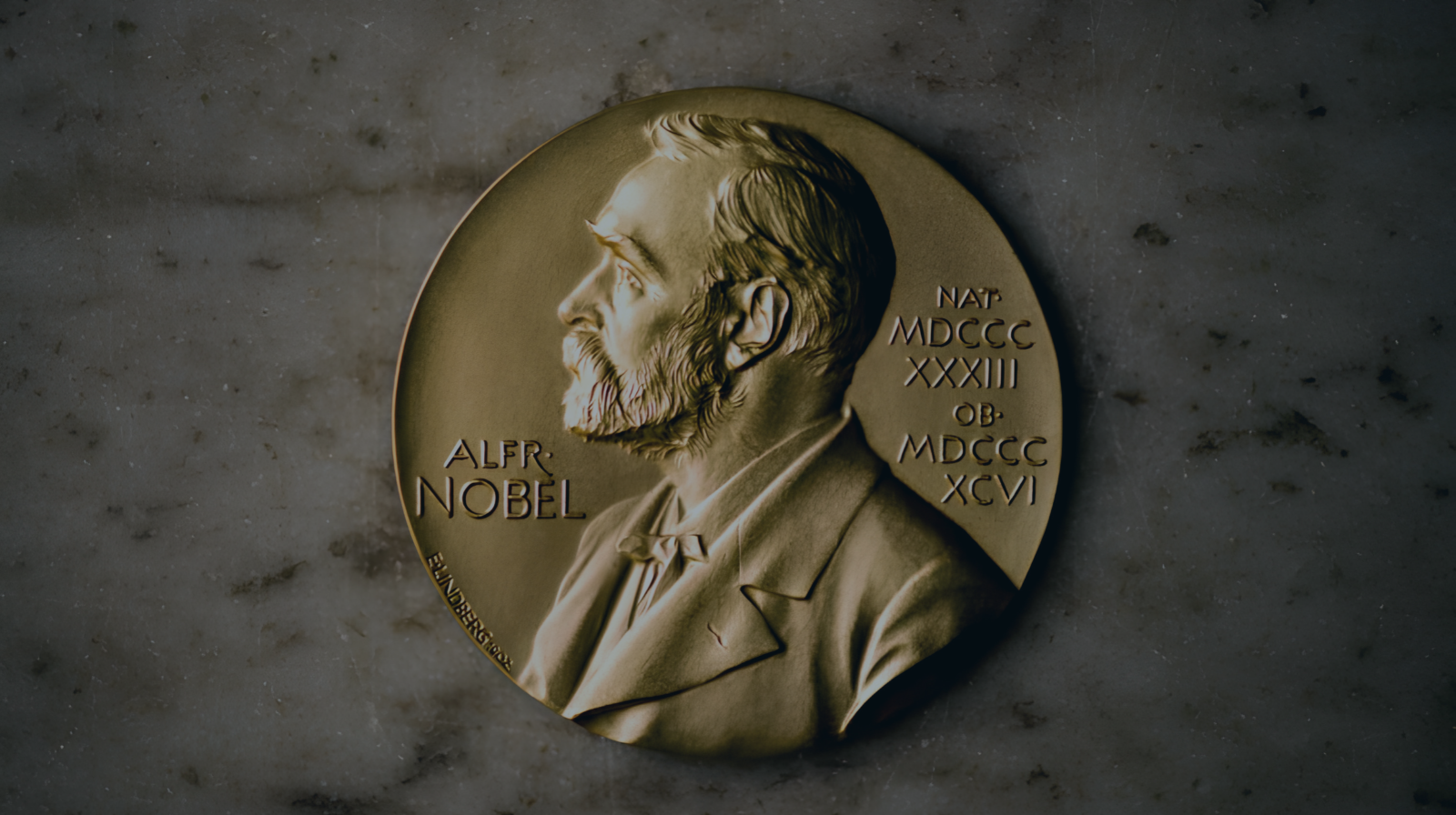
This relationship between scientific knowledge and technological capabilities is one of the central themes of the 2026 Nobel Prizes. The discoveries recognized this year in Physics, Chemistry, and Physiology or Medicine span seemingly unrelated fields: the observation of cosmic particles, the control of molecular asymmetry, and the regulation of neuronal activity using light.
However, all three share a fundamental characteristic. They originate from scientific questions whose resolution has required the development of new ways to measure, experiment with, and intervene in extraordinarily complex phenomena. Their contributions illustrate how fundamental research can lay the foundations for technologies with applications ranging from the exploration of the universe to pharmaceutical development and neuroscience.
Much of our understanding of the universe comes from the analysis of electromagnetic radiation. From radio waves to gamma rays, telescopes allow us to study different astronomical phenomena through the light signals they emit. However, there is another source of information with particularly interesting properties for astrophysics: neutrinos.
These elementary particles have no electric charge, possess an extremely small mass, and barely interact with matter. As a result, they can travel vast distances and pass through regions of the universe from which other signals would struggle to escape. Furthermore, because they are electrically neutral, their trajectories are not directly deflected by magnetic fields, making it easier to investigate their origins. These same properties, however, make them extraordinarily difficult to detect.
The 2026 Nobel Prize in Physics has recognized Francis Halzen for his contributions to the development of the IceCube Neutrino Observatory and the discovery of high-energy neutrinos of astrophysical origin.
Rather than using a conventional telescope, IceCube uses the Antarctic ice itself as a detection medium. Its original configuration comprises 5,160 optical modules distributed across 86 strings, installed at depths ranging from 1,450 to 2,450 meters.
When a neutrino interacts with matter, it can produce secondary charged particles that travel through the ice faster than light travels through that medium, although never faster than the speed of light in a vacuum. This phenomenon generates a flash of light known as Cherenkov radiation.
The sensors record these light signals, and by analyzing their spatial distribution, intensity, and arrival times, researchers can reconstruct properties of the event, such as its direction and energy.
Analysis of these light signals makes it possible to reconstruct the direction and energy of the detected particles. IceCube collects approximately one terabyte of unfiltered data every day, combining optical detection technologies with advanced data processing.
In 2013, the detection of 28 very high-energy events provided the first strong evidence for the existence of high-energy astrophysical neutrinos. This discovery helped establish multi-messenger astronomy, which combines different signals, such as neutrinos, gravitational waves, and electromagnetic radiation, to better understand the most extreme phenomena in the universe.
Two molecules can have exactly the same chemical composition and yet behave differently within an organism. In certain cases, the explanation lies in their three-dimensional structure.
This property, known as chirality, means that a molecule can exist in two forms that share the same chemical composition but have different spatial arrangements. Much like our hands, they are mirror images of one another but cannot be superimposed. Each of these forms is known as an enantiomer.
This distinction is particularly important in pharmaceutical development, as the shape of a molecule determines how it interacts with the human body. Two enantiomers of the same compound can therefore have different therapeutic effects or even exhibit different levels of toxicity.
Ensuring that a chemical reaction preferentially produces the desired molecular form is therefore one of the major challenges in organic synthesis.
The 2026 Nobel Prize in Chemistry has recognized the contributions of Henri B. Kagan and Kenso Soai to the discovery of nonlinear effects and autocatalysis in asymmetric organic synthesis.
Kagan demonstrated that a small difference in the composition of a catalyst, a substance that facilitates a chemical reaction, can produce a much greater difference in the proportions of the resulting molecules. This phenomenon, known as a nonlinear effect, opened up new possibilities for controlling and favoring the production of a particular molecular form.
Soai, meanwhile, demonstrated how a chemical reaction can progressively amplify a small molecular imbalance. In a study published in The Chemical Record, his team successfully transformed a mixture containing almost equal amounts of both enantiomers into one in which a single molecular form accounted for more than 99.75% of the total.
Beyond their applications in chemical synthesis and pharmaceutical development, these discoveries help explore one of the major unanswered questions surrounding the origin of life: why living organisms exhibit a preference for certain molecular configurations, a phenomenon known as biological homochirality.
The mechanisms studied by Soai could help explain how small molecular imbalances were amplified before the emergence of life, a question that remains open in scientific research.
One of the major challenges in neuroscience is understanding how the activity of specific groups of neurons contributes to functions such as memory, emotions, and behavior. Interestingly, one of the most revolutionary tools for studying these processes originated from a unicellular alga, Chlamydomonas, which is capable of directing its movement in response to light.
While investigating this mechanism, Peter Hegemann and Georg Nagel discovered and characterized channelrhodopsins, proteins that, when stimulated by light, allow ions to pass through the cell membrane and alter its electrical activity.
Karl Deisseroth and his colleagues harnessed this property by introducing these proteins into mammalian neurons, successfully controlling their activity using pulses of light. These contributions gave rise to optogenetics, the discipline recognized by the 2026 Nobel Prize in Physiology or Medicine, awarded to Hegemann, Nagel, and Deisseroth.
Optogenetics combines genetic engineering, photonics, and neurobiology, and its potential also extends to therapeutic applications. In 2021, a study published in Nature Medicine documented the partial recovery of vision in a patient with retinitis pigmentosa through an experimental optogenetic therapy and specially designed goggles that stimulate retinal cells.
Although these results require broader clinical validation, they provide a particularly compelling example of how studying a microscopic organism can lead to technologies with potential applications in the treatment of diseases.
One particularly interesting aspect of the discoveries recognized this year is that none emerged from isolated research efforts or short development cycles. Kagan’s early work on nonlinear effects dates back to 1986, construction of the IceCube Observatory was completed in 2010, and the first demonstrations of optical control of neuronal activity in mammals were published in 2005.
These research journeys help us understand the timescales of scientific innovation. The applications of a discovery cannot always be anticipated during the early stages of research, and its true potential sometimes emerges when disciplines that initially appeared unrelated converge.
IceCube combines particle physics, optical instrumentation, and data processing. Asymmetric synthesis connects fundamental chemistry with pharmaceutical development, while optogenetics integrates molecular biology, photonics, and engineering to expand the possibilities of neuroscience research.
This multidisciplinary approach is also part of the research model at ARQUIMEA Research Center and its QCIRCLE Centre of Excellence. Its commitment to long-term research and the convergence of scientific disciplines makes it possible to explore emerging technologies, validate their potential, and lay the foundations for their future transfer to industry.